AWPL 2025(4) 57-60 Mount Žeden MK


Archives of Western Palearctic Lepidoptera

Open Source Research on Western Palearctic Lepidoptera


AWPL 2025 (4): 57-60


Additional notes on the fauna of Mount Žeden (North Macedonia) in late spring 2025 (Lepidoptera, Papilionoidea & Zygaenidae)
Submitted: 05.xii.2025 | Accepted: 09.xii.2025 | Published online: 30.xii.2025.
DOI: 10.5281/zenodo.17818348

Michel Taymans1 | Bénédicte Jonckers1
0
1 Taymans M., Clos du Moulin Royal 2 bte 02, B-6900 Marche-en-Famenne, Belgium. michel.taymans@hotmail.com
1 Jonckers B., Clos du Moulin Royal 2 bte 02, B-6900 Marche-en-Famenne, Belgium.


Abstract
A first visit to Mount Žeden in April 2025 (Taymans & Cuvelier 2025) enabled the observation of several species of interest for the Papilionoidea fauna of North Macedonia, including Proterebia phegea (Borkhausen, 1788), a species newly for the country. A second visit was scheduled for mid-June of the same year refine our knowledge and confirmed the importance of this region for the conservation of the Lepidoptera fauna of North Macedonia.

Key words
Papilionoidea — faunistics — conservation — Mount Žeden — North Macedonia — Balkan Peninsula.


Introduction
The observations made at the beginning of spring 2025 on Mt. Žeden demonstrated the richness of its Lepidoptera fauna (Taymans & Cuvelier 2025). To further our knowledge and obtain additional insights into this fauna, the site was revisited at the end of spring on 13.vi.2025.
The rather dry climate in this region (fewer than fifteen days of light rain between April 15th and June 13th) combined with the high temperatures (with maxima exceeding 25°C during the same period) had markedly altered the landscape compared with the first visit. The vegetation was extremely dry, and butterflies were scarce in the lower part of the mountain. Seasonal development was clearly advanced, with several species recorded that normally fly later in the year. On the day of the biotope survey, the temperature in the shade exceeded 30°C.

Biotopes and observations
Only the southern part of Mt. Žeden, situated north of the village of Boyanë, was explored on 13.vi.2025. A total of 47 species of Papilionoidea and six species of Zygaenidae were recorded at different elevations of the mountain.
A. The lower grassland zone at approximately 400–500 m a.s.l. was very dry, and butterflies were scarce. Only the following species were recorded:
Iphiclides podalirius (Linnaeus, 1758), Papilio machaon Linnaeus, 1758, Leptidea sinapis (Linnaeus, 1758), Colias croceus (Geoffroy, 1785), Polyommatus icarus (Rottemburg, 1775), Issoria lathonia (Linnaeus, 1758), Coenonympha pamphilus (Linnaeus, 1758).
All these species had already been recorded previously in April 2025, though some were likely from a subsequent generation.

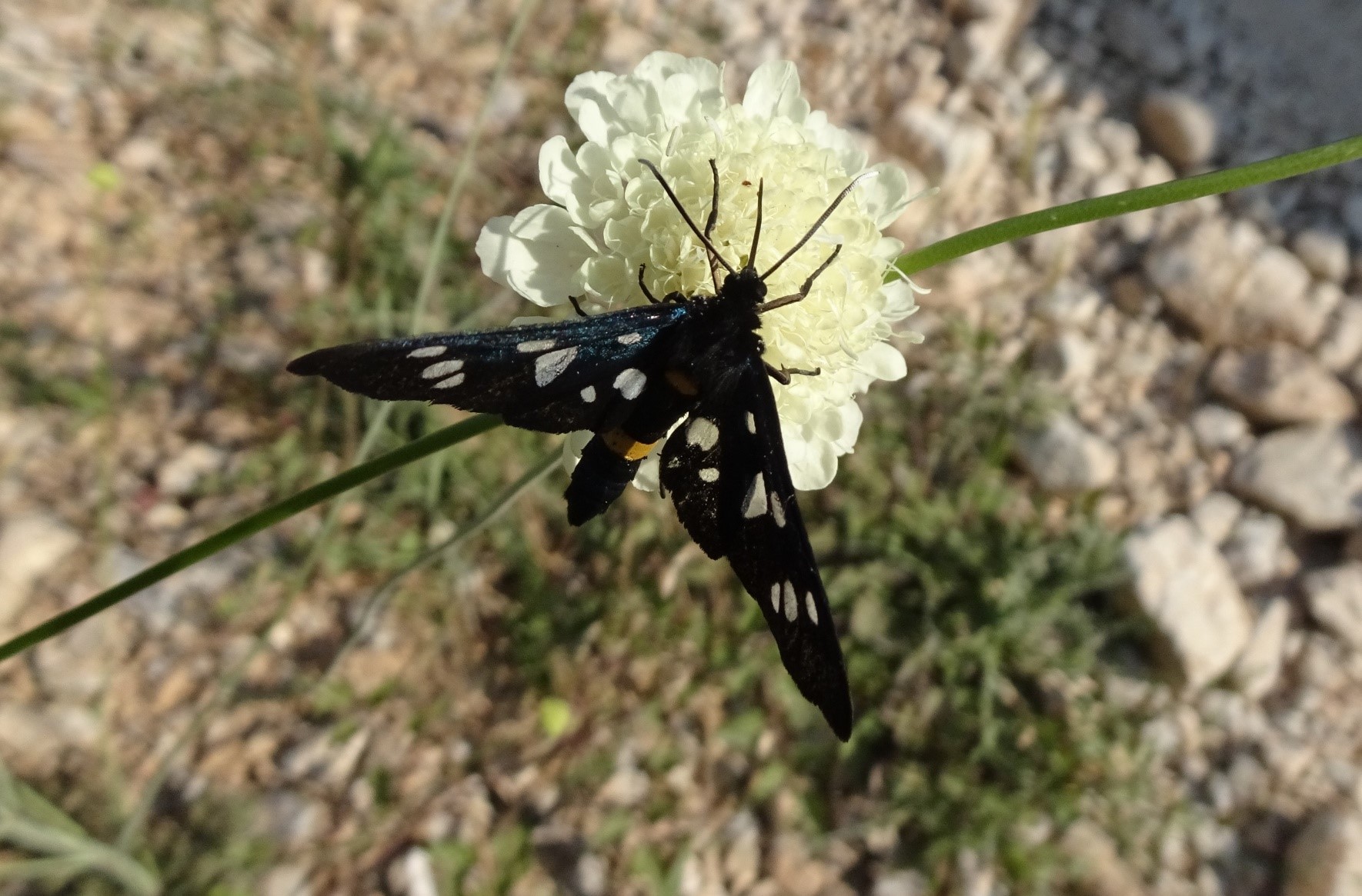
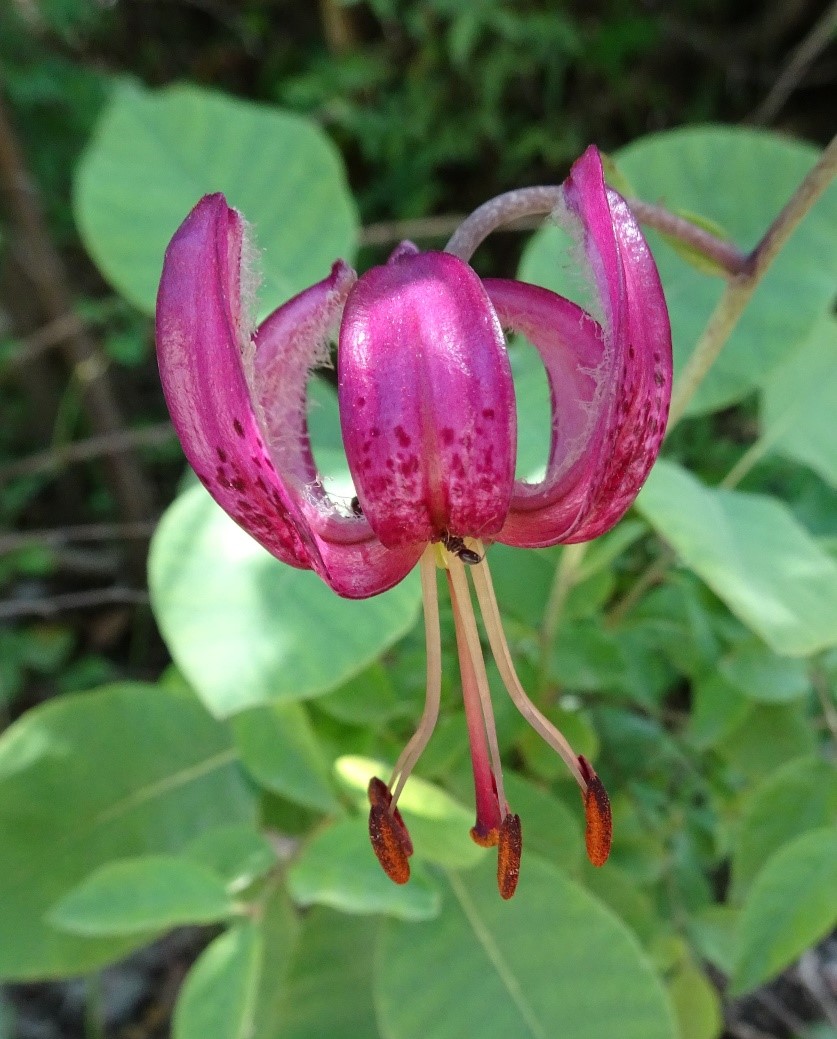
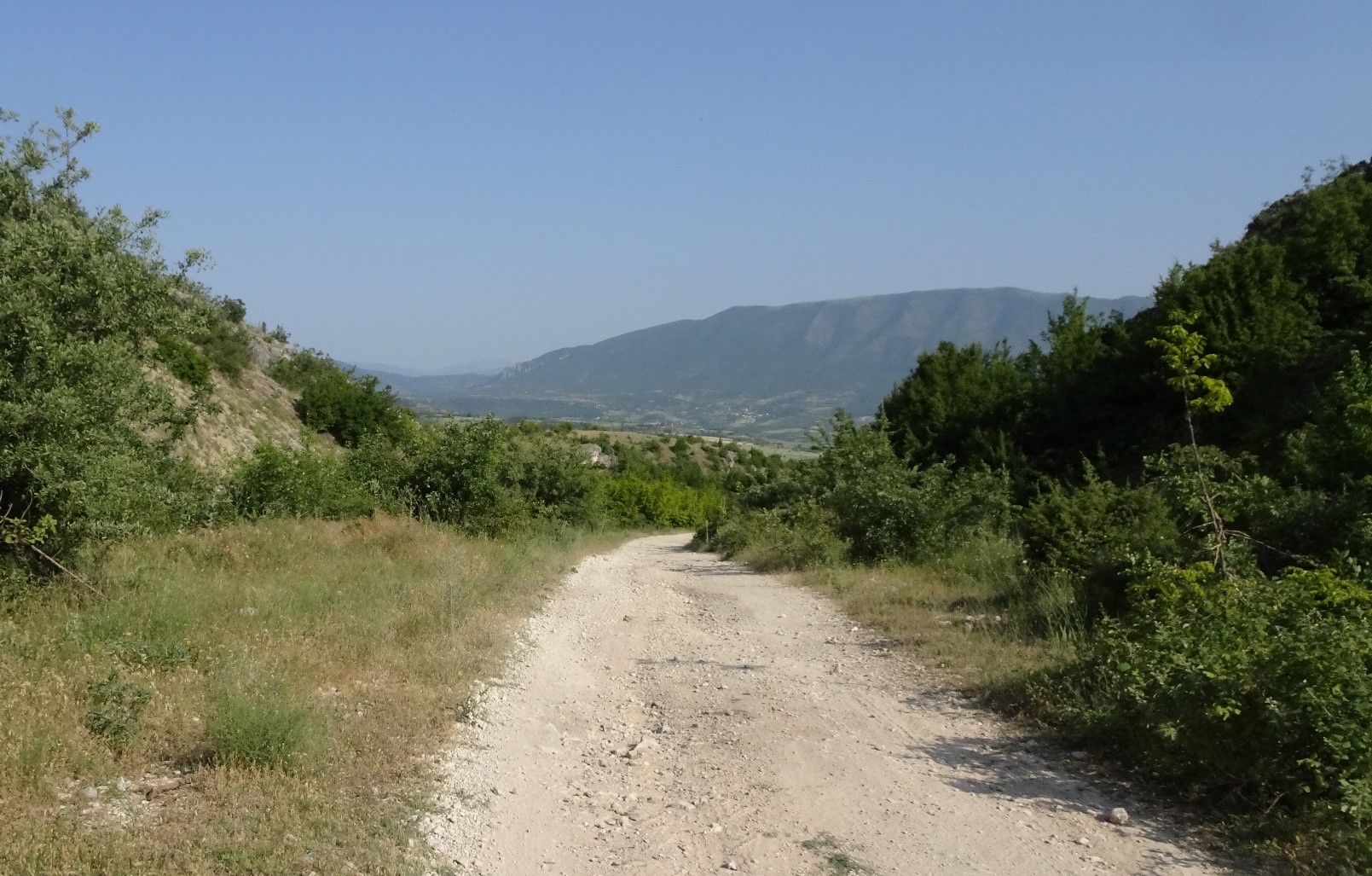
B. The mid-elevation valley (Fig. 1a-c), at approximately 500–900 m a.s.l., was relatively unaffected by the drought, and the vegetation remained green and in bloom. Butterflies were abundant in both species and numbers:
I. podalirius, P. machaon, Ochlodes sylvanus (Esper, 1777), Thymelicus lineola (Ochsenheimer, 1808), Spialia orbifer (Hübner, [1823]), Spialia phlomidis (Herrich-Schäffer, [1845]), Pyrgus malvae (Linnaeus, 1758), Pyrgus carthami (Hübner, [1813]), Pyrgus armoricanus (Oberthür, 1910), L. sinapis, Leptidea duponcheli (Staudinger, 1871), Gonepteryx rhamni (Linnaeus, 1758), Colias alfacariensis Ribbe, 1905, C. croceus, Aporia crataegi (Linnaeus, 1758), Pontia edusa (Fabricius, 1777), Pieris rapae (Linnaeus, 1758), Pieris mannii (Mayer, 1851), Pieris ergane (Geyer, [1828]), Pieris balcana Lorković, [1969], Lycaena phlaeas (Linnaeus, 1761), Satyrium ilicis (Esper, [1779]), Satyrium spini ([Denis & Schiffermüller], 1775), Tarucus balkanica (Freyer, [1843]), Cupido minimus (Fuessly, 1775), Plebejus idas (Linnaeus, 1761), Aricia anteros (Freyer, 1839), Lysandra bellargus (Rottemburg, 1775), P. icarus, Polyommatus thersites (Cantener, 1835), Limenitis camilla (Linnaeus, 1764), I. lathonia, Vanessa cardui (Linnaeus, 1758), Vanessa atalanta (Linnaeus, 1758), Nymphalis polychloros (Linnaeus, 1758), Melitaea didyma (Esper, [1778]), Melitaea cinxia (Linnaeus, 1758), Melitaea athalia (Rottemburg, 1775), C. pamphilus, Maniola jurtina (Linnaeus, 1758), Melanargia larissa (Geyer, [1828]), Melanargia galathea (Linnaeus, 1758), Hipparchia volgensis (Mazochin-Porshnjakov, 1952) (male genitalia verified) and Chazara briseis (Linnaeus, 1764). Zygaenidae were represented by the following species: Zygaena carniolica (Scopoli, 1763), Zygaena loti ([Denis & Schiffermüller], 1775), Zygaena angelicae Ochsenheimer, 1808 and Zygaena filipendulae (Linnaeus, 1758).
Notably, S. phlomidis had already been observed on April 19th. While a single generation with widely spaced emergences is a plausible hypothesis, the possibility of two successive generations cannot be excluded. Continuous monitoring of this species throughout the year would be required to confirm its phenology.

Fig. 1a-b. Two examples illustrating the richness of the fauna and flora in this mid-elevation valley: Syntomis marjana Stauder, 1913 (Lepidoptera: Arctiinae) and martagon lily, Lilium martagon (Liliopsida: Liliaceae) (Photo:  Bénédicte Jonckers).
Fig. 1c. Mid-elevation valley at approximately 800 m a.s.l., habitat of Spialia phlomidis. (Photo: Bénédicte Jonckers)

C. The summit zone, at approximately 900–1.200 m a.s.l. was relatively poor in butterfly numbers. Proterebia phegea, which had been abundant in this area in April, was no longer present. Most of the butterflies observed were badly damaged, suggesting that the populations of these species had not been renewed by recent emergences. However, some species present at this altitude had not been observed at lower altitudes. These are marked with (*) in the following list:
Favria cribrellum (Eversmann, 1841) (*), C. croceus, A. crataegi, P. rapae, P. icarus, Polyommatus amandus (Schneider, 1792) (*), I. lathonia, Brenthis hecate ([Denis & Schiffermüller], 1775) (*), V. atalanta, N. polychloros, C. pamphilus, M. jurtina, M. galathea and H. volgensis (male genitalia verified). Zygaenidae were represented by the following species: Zygaena purpuralis (Brünnich, 1763) (*), Z. angelicae and Zygaena lonicerae (Scheven, 1777) (*).

The most interesting observation is certainly F. cribrellum. Only a single female specimen was seen, which was already quite worn.
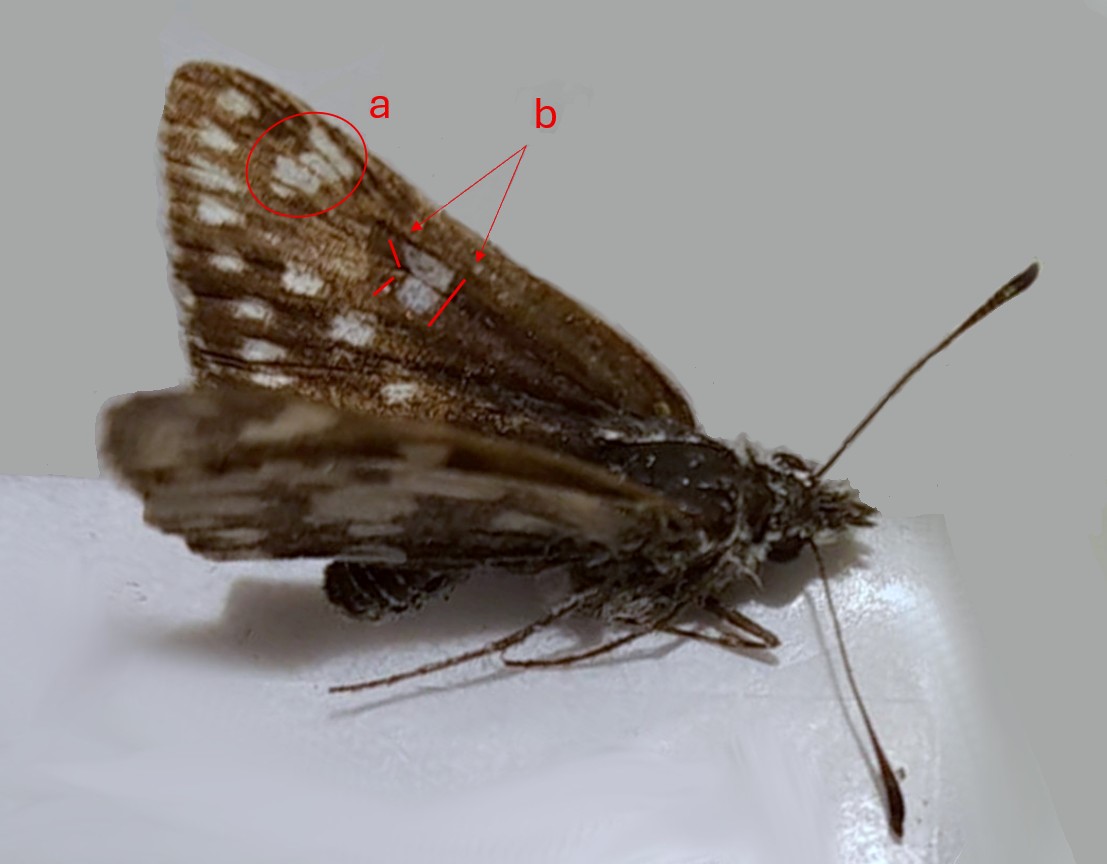
However, some uncertainty remains regarding the identification of the specimen, particularly in relation to Muschampia tessellum (Hübner, [1803]). The following criteria (Fig. 3) support assignment to F. cribrellum:
a) The four white spots are irregular; the longest are rectangular (in contrast, M. tessellum usually has only three less-angular spots).
b) The discoidal spot is straight proximally and forms an angle distally (in M. tessellum, this spot is more rounded and the proximal edge less straight).
The geographical distribution of this species in Europe is highly fragmented. It has been recorded in Greece (Davkov & Mérit 2017, 2018), Bulgaria (Kolev 2003; Hoejgaard & Beshkov 2011; Langourov 2019; Wagner & Kolev 2019), Serbia (Popović Đurić Franeta & Verovnik 2013; Popović & Đurić 2014; Langourov 2019; Vujić, Đurić & Tot 2020), Romania (see references compiled in Dincǎ Kolev & Verovnik 2010), Russia (Eversmann 1841), and Ukraine (Nekrutenko & Tshikolovets 2005). In North Macedonia, the species is known from fewer than ten localities (see inventory below). Its presence in Hungary remains uncertain. For North Macedonia, the following sites are cited in the literature, listed in the chronological order of their publication:
a) The eastern slopes of Mount Suva Planina near the village of Nova Breznica, 17 km southwest of Skopje (Lorković 1983);
b) Two mapped data points taken from a UTM grid, 34T EM 21 and 34T EM 24 (Schaider & Jakšić 1989), the first of which has not been subsequently confirmed;
c) The southern slopes of Mount Vodno (Verovnik & Micevski 2009);
d) Grupčin village (Dincǎ, Kolev & Verovnik 2010), based on a personal communication from P. Russel;
e) Regarding the distribution of the species in North Macedonia, Dincǎ et al. (2010) conclude: “In the Republic of Macedonia, judging from the precisely known records and satellite imagery, the potential area where M. cribrellum may occur extends in an arc from Raduša village near the border with Kosovo and Mount Vodno just westward south of Skopje to Gostivar town and then south to Brod and Debrešte villages. Further research in this lepidopterologically very rich region, including a verification of the record from the vicinity of Gorna Belica in Schaider & Jakšić (1989), is desirable.”
f) Mt. Zheden (Davkov & Mérit 2017) without further details on the locality; is this a reference to the locality of Grupčin (point d. above) which is located at the foot of Mt. Zheden?
The closest known populations in Europe are, to the south, on Mount Olympus (Greece) and to the northeast, in the Stara Planina Mountains of Serbia and Bulgaria. These lie approximatively 220 km and 180 km respectively from the biotopes of North Macedonia.
F. cribrellum is included in the European Red List of Butterflies (van Swaay et al. 2025) with the status VU (Vulnerable) and the criteria B2ab(iii,v). These criteria indicate a very small area of occupancy, a highly fragmented population or a limited number of localities, and an observed, inferred or predicted continued decline in habitat quality and in the number of mature individuals.


Fig. 2. F. cribrellum ♀, Mt Žeden, 1000 m a.s.l., (42.020138° N, 21.177992° E), 13.vi.2025. Leg. Michel Taymans.
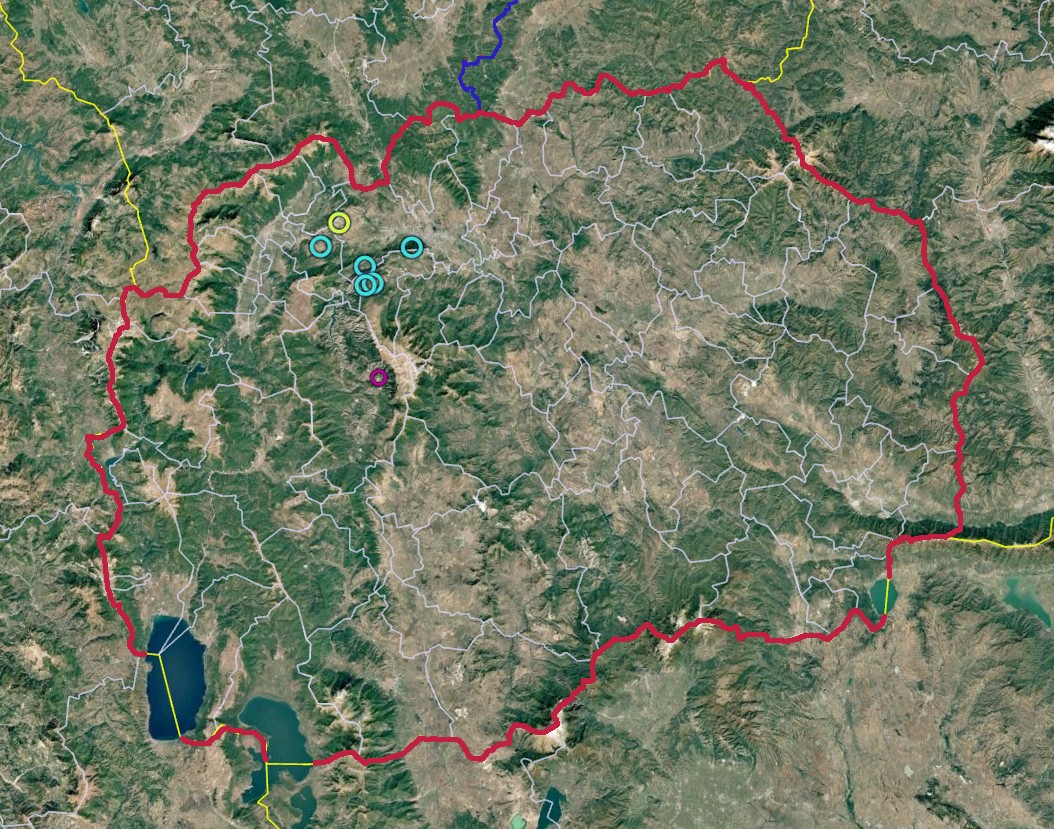
Fig. 3. Distribution of F. cribrellum in North Macedonia. (Map: Michel Taymans):
Localities cited in the literature;
The observation location on Mt. Žeden;
The uncertain locality cited by Schaider & Jakšić (1989), UTM grid: 34T EM 21.

Conclusions
Overall, across the four visits conducted in early and late spring 2025 (19.iv.2025, 20.iv.2025, 30.iv.2025 and 13.vi.2025), a total of 64 species of Papilionoidea and 6 species of Zygaenidae were recorded. The occurrence of Proterebia phegea, for which, as far as is known, Mount Žeden is the only habitat in North Macedonia, the presence of F. cribrellum, a species regarded as Vulnerable at the European level, together with numerous species listed on the Red List of North Macedonia (Krpač & Darcemont 2022) and several other Balkan endemics, confirms that Mount Žeden represents an emblematic site for the Lepidoptera fauna of North Macedonia.

Author contribution
Michel Taymans: conceptualization, field work, analysis, visualisation, writing - original draft, writing – review and editing.
Bénédicte Jonckers: field work, writing – review and editing.

Acknowledgements
We thank Vlad Dincǎ for his valuable assistance in the identification of the Muschampia specimen, Lulëzim Shuka for identifying the martagon lily (Lilium martagon), and Sylvain Cuvelier for reviewing the final version of the manuscript.

References

Davkov S. & Mérit X. 2017. Muschampia cribrellum (Eversmann, 1841) new to the Greek butterfly fauna and found in an unexpected alpine ecosystem (Lepidoptera: Hesperiidae). — Lépidoptères, Revue des Lépidoptéristes de France 26(66): 38–42.

Davkov S. & Mérit X. 2018. Muschampia cribrellum inexpectata, a new subspecies from Mt Olympus, Greece (Lepidoptera: Hesperiidae). — Lépidoptères, Revue de Lépidoptéristes de France 27(69): 2–11. (url)

Dincǎ V., Kolev Z. & Verovnik R. 2010. The distribution, ecology and conservation status of the Spinose Skipper Muschampia cribrellum (Eversmann, 1841) at the western limit of its range in Europe (Hesperiidae). — Nota Lepidopterologica 33(1): 39–57. (url)

Eversmann E. 1841. Nachricht ueber einige noch unbeschriebene Schmetterlinge des oestlichen Russlands. — Bulletin de la Société impériale des naturalistes de Moscou 1841(1): 18-27, pl. 3. (url).

Franeta F. & Gascoigne-Pees M. 2022. The lifecycle and ecology of the Spinose Skipper - Favria cribrellum (Eversmann, 1841) in the Republic of North Macedonia (Lepidoptera, Hesperiidae). — Nota Lepidopterologica 45: 119-127. (url)

Hoejgaard K. & Beshkov S. 2011. Rediscovering Muschampia tessellum ([Hübner, [1803]) in Bulgaria with additional notes on M. cribrellum (Eversmann, 1814) from the Eastern Balkan (Stara Planina) mountains. — Entomologist’s Record and Journal of Variation 123: 147–150. (url)

Kolev Z. 2003. First record of Muschampia cribrellum in Bulgaria, with a review of the recorded distribution of genus Muschampia in the country (Lepidoptera: Hesperiidae). — Phegea 31(1): 15–21. (url)

Krpač V. & Darcemont C. 2012. Red list of butterflies (Lepidoptera: Hesperioidea & Papilionoidea) for Republic of Macedonia. — Revue Ecologie (Terre Vie) 67: 117–122. (url)

Langourov M. 2019. New data on the butterflies of Western Stara Planina Mts (Bulgaria & Serbia) (Lepidoptera: Papilionoidea). — Ecologica Montenegrina 20: 119–162. (url)

Lorković Z. 1983. A new Syrichtus and two doubtful Pyrgus species for the fauna of Yugoslavia (Lep., Hesperiidae). — Acta entomologica Jugoslavica 19: 33-41. (url)

Nekrutenko Y. & Tshikolovets V. 2005. The Butterflies of Ukraine. — Kyiv: Rayevsky Scientific Publishers (Ed.). 231 p.

Popović M., Đurić M., Franeta F. & Verovnik R. 2013. On the extremely rich butterfly fauna (Lepidoptera: Rhopalocera) of the south-eastern foothills of Stara Planina Mts in Serbia. — Phegea 41(4): 74-81 (url), annex 1-7. (url)

Popović M. & Đurić M. 2014. Dnevni leptiri Stare planine. Butterflies of Stara Planina. — Beograd: Srbijašume and HabiProt (Ed.). 208 p.

Schaider P. & Jakšić P. N. 1989. Die Tagfalter von jugoslawisch Mazedonien. — Ljubljana: Druckerei. J. Pleško (Ed.). 199 p.

Taymans M. & Cuvelier S. 2025. Exploration of Mount Žeden and discovery of Proterebia phegea (Borkhausen, 1788), a new species for the fauna of North Macedonia. — Archives of Western Palearctic Lepidoptera 2025(2): 21-30. (url)

Verovnik R. & Micevski B. 2009. On the presence of Syrichtus cribrellum (Eversmann, 1841) (Lepidoptera: Hesperiidae) in the Republic of Macedonia. — Entomologist’s Gazette 60: 232–236. (url)

van Swaay C., Warren M., Ellis S., Clay J., Bellotto V., Allen D.J. & Trottet A. 2025. Measuring the pulse of European biodiversity. European Red List of Butterflies. — Brussels, Belgium: European Commission (Ed.). x-80 p. (url)

Vujić M., Đurić M. & Tot I. 2020. New localities for rare butterflies Muschampia cribrellum and Melitaea ornata (Lepidoptera: Hesperiidae, Nymphalidae) in Serbia. — Acta Entomologica Slovenica 28(2): 159-164. (url)

Wagner W. & Kolev Z. 2019. Muschampia cribrellum (Eversmann, 1841) – preimaginal stages and their ecology in W-Bulgaria (Lepidoptera: Hesperiidae). — Nachrichten des Entomologischen Vereins Apollo, N. F. 40(2): 113–117. (url)


Archives of Western Palearctic Lepidoptera 2025
Editors-in-Chief: Michel Taymans & Sylvain Cuvelier
This work is licensed under a Creative Commons Attribution 4.0 International License (CC BY 4.0)
ISSN 3041-6531