AWPL 2025(4) 1-13 P geyeri Albania


Archives of Western Palearctic Lepidoptera

Open Source Research on Western Palearctic Lepidoptera


AWPL 2025 (4): 1-13


Following the trail of Rebel and Misja.
A century-later confirmation of Pseudochazara geyeri (Herrich-Schäffer, [1846]) in Albania and a critical reassessment of its Balkan range.

Submitted: 06.xi.2025 | Accepted: 24.xi.2025 | Published online: 30.xii.2025.
DOI: 10.5281/zenodo.17618015

Sylvain Cuvelier1 | Giuseppe Molinari2
0
1 Diamantstraat 4, B-8900 Ieper, Belgium. sylvain.cuvelier@telenet.be
2 Via San Pietro 49, I-47016 Predappio, Italy. giuseppemolinari_ph@libero.it


Abstract
The presence of Pseudochazara geyeri (Herrich-Schäffer, [1846]) in Albania (Misja, 2005) is confirmed, documenting a population on the west-facing slopes of Mali i Thatë (1565–2088 m). The species appears locally abundant and occupies a larger area than previously recognised. The Balkan population, previously described as ssp. occidentalis, is here considered a geographical race to emphasise its disjunct distribution, a status further supported by the limited resolution of available mitochondrial COI data. The species’ occurrence on Mt. Pelister (North Macedonia) is uncertain and is treated as data deficient. Implications for its distribution, conservation status, and management in the Balkans are discussed.

Key words
Pseudochazara geyeri Pseudochazara geyeri occidentalis — Papilionoidea — Nymphalidae — Satyrinae — distribution — conservation — Mali i Thatë — Albania — Balkans.


Introduction
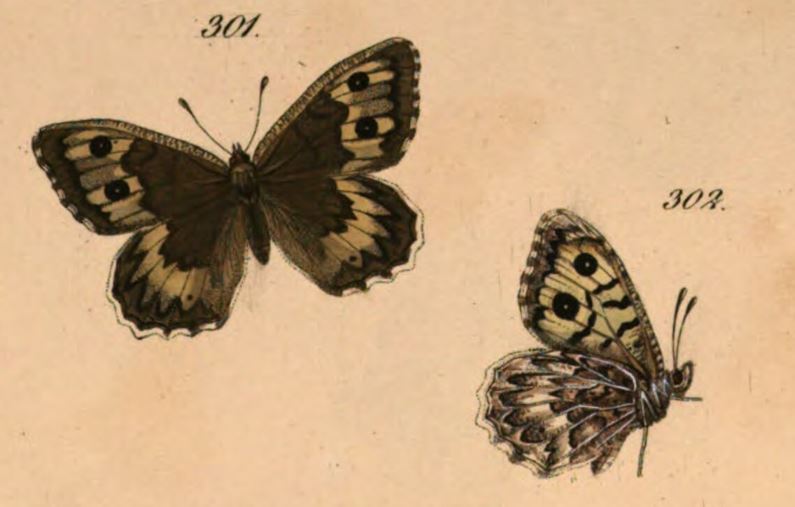
Pseudochazara geyeri, originally named and illustrated (Fig. 1a-b) as Satyrus Geyeri Bisch. by Herrich-Schäffer in 1846, was collected from the southern slopes of Mount Ararat located in Iğdır Province, eastern Turkey and
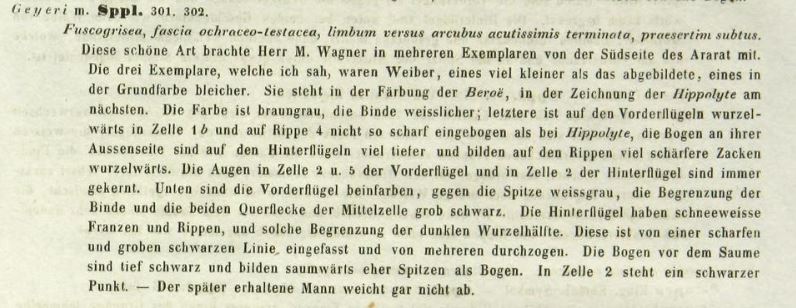
was subsequently given a brief formal description by him in 1851 (Fig. 1c). Fruhstorfer (1911) later described the species and its subspecies aristonicus from Amasia. P. geyeri is treated here according to the taxonomic classification of Taymans and Cuvelier (2025).
Drenowsky (1921) records the presence of this taxon in Europe. His research dates from 1917–1918 in the region surrounding the towns of Ohrid and Resen (historically Resna) as well as the region between the two large lakes, Ohrid and Prespa. This region includes the Galičica Mountains, the Baba Mountains (Pelister range) to the east of Resen, and the Bigla Mountains to the north of the town.
Of particular interest is Drenowsky’s observation at the end of page 165, in which he notes: ‘Die asiatischen Arten Satyrus geyeri und Ino capitalis, von welchen man die erste zahlreich in einer Höhe von 1600–2000 m antrifft, fehlen gänzlich auf dem benachbarten Babagebirge. In the introduction to this publication, Drenowsky specifies Koscharispitze (1900 m) as the locality representing his research area in the Baba Mountains (Pelister region) where he did not find a population. In 1930, Drenowsky reported that P. geyeri was widely distributed and frequently encountered in the high limestone rocky areas of Mt. Galičica, above 1600 metres, and, at that time, known only from the western and southern slopes.
In 1931, Rebel & Zerny described this population as a new subspecies, originally formatted as: Satyrus (Hipparchia) Geyeri (H. S.) occidentalis nov. subsp., based on specimens from Alexander Drenowski, collected on Mt. Galičica at 1600-1900 m on 24.vii.1918. He noted that they differ from the Armenian material by having a paler underside of the wings and a considerably broader whitish postmedian band on the hindwing underside. Relevant printscreens and additional details are provided below (Fig. 2 a-d).
The distribution of Pseudochazara geyeri has been gradually clarified through successive studies.
Holik (1949) mentions: "Mittlerweile wurde die Art auch anderwärts auf dem Balkan aufgefunden. Es lagen 8 ♂♂ von der Petrina-Planina vor, die wahrscheinlich zur gleichen Unterart gehören."
“Petrina Planina” may not be a new area as suggested, since the name is also recorded for the Mount Galičica area (Aistleitner & Gros, 2020).
Higgins (1970) reported the taxon as: "In Europe known only from mountains in Albania and in SE. Yugoslavia north of Lake Ochrid." Subsequently, Higgins (1975) refined this account, stating: "P. g. occidentalis Rebel & Zerny 1931. Range. Albania, a few isolated colonies known near Lake Ochrid."
Gross (1978) summarises the global range of P. geyeri as extending from Albania and Macedonia to eastern Anatolia, reaching as far as Mount Ararat and Kars. He further described two new subspecies from Turkey: P. g. karsicola from Kars, representing populations from northern and eastern Anatolia, and P. g. selim from Erciyas Dağı near Kayseri, west of Gürün, central Anatolia.
Schaider and Jakšić (1989), provide a map of the species’ distribution in North Macedonia (Map 164), indicating its occurrence from Mount Galičica to Mount Pelister.


Fig. 1a. Left: first illustration of Pseudochazara geyeri (Satyrus Geyeri Bisch.) by Herrich-Schäffer, 1846 (pl. 62, fig. 301-302).
Fig. 1b. Right, top: original name Satyrus Geyeri Bisch. as published by Herrich-Schäffer, 1846 (page 163).
Fig. 1c. Right, bottom: short description of Satyrus Geyeri Bisch. (now Pseudochazara geyeri) by Herrich-Schäffer, 1851 (page 13).

Fig. 2a. Global research area of Drenowsky as described in Rebel & Zerny (1931), p. 45.
Konsko: village of Konjsko on the shore of Lake Prespa. Galičica Planina: Mount Galičica. Resna: Resen. Localities lie outside the Principality of Albania (1914-1925).
Fig. 2b. Original name, first mentioned in the article: Satyrus Geyeri occidentalis R. und Z. (79) (Rebel & Zerny 1931, p. 49).


Fig. 2c. Description of P. geyeri occidentalis (Rebel & Zerny 1931, p. 74).
Fig. 2d. Photographs in "Tafel 1" (Rebel & Zerny, 1931) of the ♂ upper- and ♀ underside of P. geyeri occidentalis.

Koutroubas (1993) provided the first record of P. g. occidentalis in Greece, based on specimens collected in 1992 on Oros Malimadi.
In Hesselbarth et al. (1995a-b), the cited global range is: "Verbreitung: Die Art fehlt in den Levante-Staaten, in Irak und Iran. Sie ist lokal im westlichen teil der Balkanhalbinsel, in der Türkei und im westlichen Transkaukasien verbreitet." The accompanying map in Hesselbarth et al. (1995c, map 289 on p. 794), indicates a single recorded locality in the western half of Turkey and numerous scattered localities throughout the eastern half. Eumenis geyeri aristonicus Fruhstorfer [1911]; Satyrus geyeri occidentalis Rebel & Zerny 1931; Pseudochazara geyeri selim Gross, 1978 and Pseudochazara geyeri karsicola Gross, 1978 are treated as "Infrasubspezifisches" taxon.
Tolman (1997) summarised the distribution of P. g. occidentalis as extending across mountains near Lake Ohrid in Albania, the Galičica Plateau and Pelister Massif in south-western North Macedonia (1500–1700 m), and southwards into north-western Greece on Mt Malimadi and the Triklarion Mountains (1450–1650 m).
Slivov & Abadjiev (1999) reported this species based on samples kept in the collection of Al. Slivov (IBER) as new to the Bulgarian fauna from Slavyanka Mt. and Belasitsa Mt. But Hristova & Beshkov (2017) note that the earlier record of P. geyeri from Slavyanka and Belasitsa mountains (Slivov & Abadjiev 1999) was based on mislabelled specimens, and following Kolev (2002), the species is excluded from the Bulgarian fauna. An important quotation in Slivov & Abadjiev (1999, p. 146) questions, for the first time, the occurence of the species in Albania: "The reported occurence of the species in Albania (Tolman & Lewington 1997: 201) is very possible but still not confirmed."
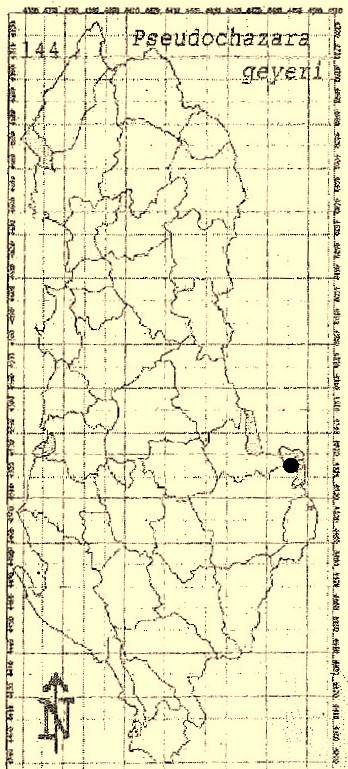
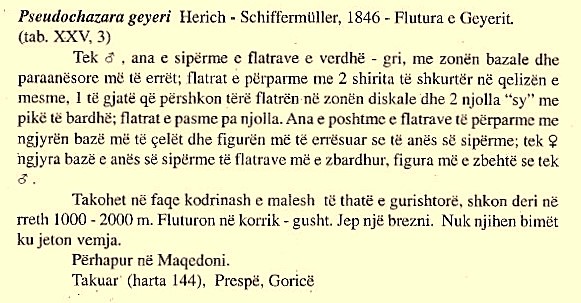
The first record showing a clearly defined locality in Albania (Fig. 3a), on Mali i Thatë, was published by Misja (2005) based on personal observations (Fig. 3b).

Fig. 3a. P. geyeri (Map 144 in Misja 2005): blackened dot indicates locality. Image can be enlarged by clicking.
Fig. 3b. Paragraph on P. geyeri in Misja (2005). "Occours in Macedonia. Encountered (Map 144), Prespa, Gorica".

P. geyeri was documented from Galičica National Park by Krpač et al. (2011) and later assessed as Vulnerable in North Macedonia by Krpač and Darcemont (2012).
Tshikolovets (2011) lists the range as the central Balkans, Asia Minor, Transcaucasia, and north-western Iran. For P. geyeri occidentalis, the distribution is given as border of Albania and F.Y.R.O. Macedonia (Galičica Planina Mountains), F.Y.R.O. Macedonia (Pelister Mountains), N.W. Greece (Malimadi and Triklarion Mountains), border of Greece an Bulgaria (Rhodope Mountains). This last record has since been demonstrated to be incorrect, with updated evidence provided earlier in this manuscript.
Tshikolovets & Nekrutenko (2012) record the species’ range as the central Balkans, Asia Minor, Transcaucasia, and north-western Iran. Within Transcaucasia, the distribution is reported from the western part of the Lesser Caucasus and the northern section of the Djavakheti–Armenian plateau. The subspecies are as follows: Pseudochazara geyeri (Herrich-Schäffer, [1846]), type locality: South Ararat, Turkey; P. geyeri occidentalis Rebel & Zerny, 1931, type locality: Galičica; P. geyeri karsicola Gross, 1978, type locality: Kars (Armenian Highlands); and P. geyeri selim Gross, 1978, type locality: Erciyas Dagi, Turkey.
Takáts & Mølgaard (2016, Map 1A) show P. geyeri occidentalis occuring on Mt. Galičica and the Pelister Massif (south-west North Macedonia), near Lake Ohrid (Albania), as well as on Mt. Malimadi and the Triklarion Mountains (north-west Greece).
Kudrna (2019) describes P. geyeri as occurring across the Balkan Peninsula. The map on p. 234 shows one dot in Bulgaria (see above) and another on the border of North Macedonia. Because of the MEB project's mapping system, these points are not highly precise and should therefore be treated with caution. Accordingly, both the Bulgarian record and the border locality are considered questionable and are not included in the present analysis.
Popović et al. (2021) investigated the variation in butterfly species richness and assemblage composition along an elevational gradient and across different aspects on Mt. Galičica. P. geyeri occurred within the altitudinal classes 998–1152 m and 1616–1770 m, primarily on slopes with a westerly aspect (225–315°).
Pamperis (2025) provides a recent map confirming the known range of P. geyeri in Greece, including Mt. Malimadi and the Triklarion Mountains. Oral communication further indicates a potential decline in local populations within the Greek areas.
Genetic data for Pseudochazara geyeri, belonging to the "mamurra" group, remain limited and are currently available only from mitochondrial COI barcoding.
Takáts & Mølgaard (2016) reported a single sequence and similarly Verovnik & Wiemers (2016) included only a single sequence in the "mamurra" group, which formed a monophyletic cluster with identical or very similar haplotypes.
More recently, Dapporto et al. (2022a-b) analysed five sequences from specimens collected in Greece and North Macedonia, all representing a single haplotype.
In the BOLD Data Portal, thirteen public sequences of P. geyeri are available, representing specimens from eastern Turkey, North Macedonia and Greece. All of these sequences are assigned to a single BIN: BOLD:AAD3197.

Observations
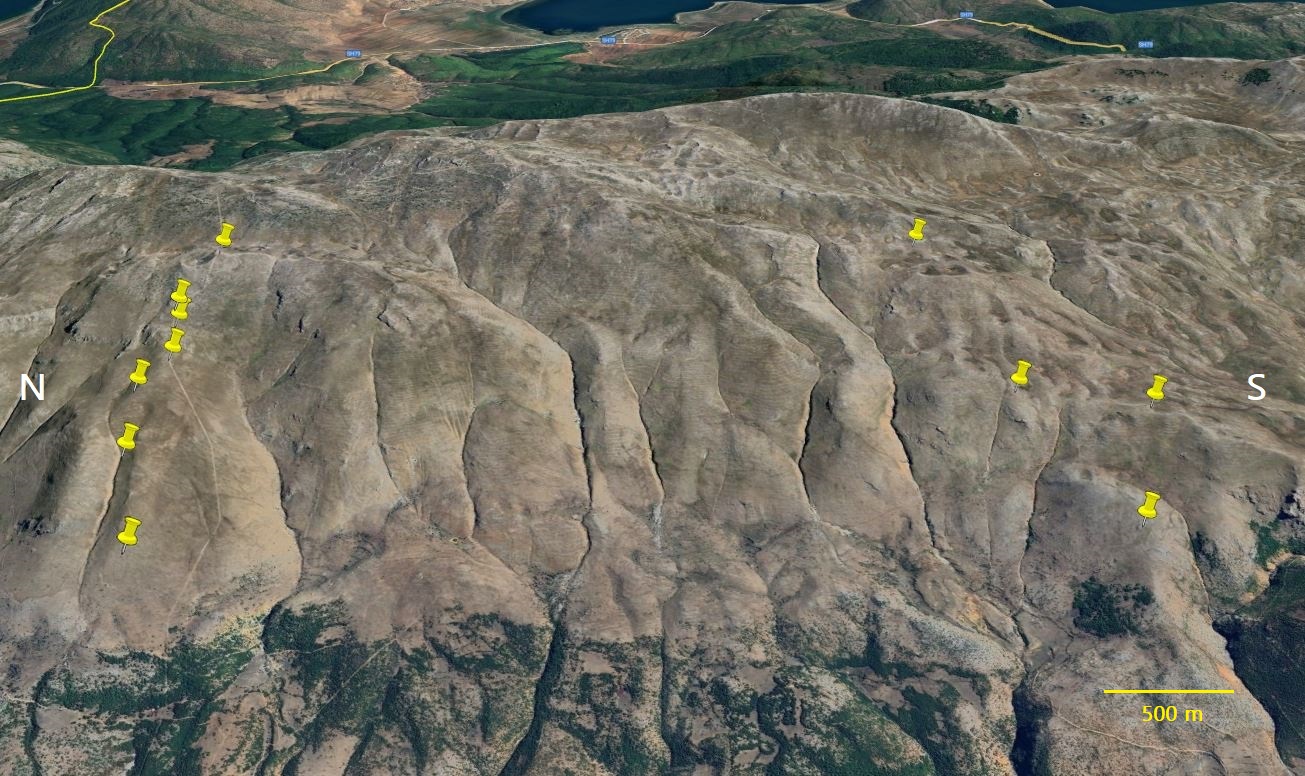
On 02.viii.2025 the area north-east above Alarup (Fig. 5d, 5i-j) was surveyed by the first author.
The first rocky slopes with scattered to closed bushes, between 1250 and 1500 m, held several species such as Colias croceus (Geoffroy, 1785), Lycaena phlaeas (Linnaeus, 1761), Lysandra bellargus (Rottemburg, 1775), different Polyommatus species, Issoria lathonia (Linnaeus, 1758), Brintesia circe (Fabricius, 1775), Chazara briseis (Linnaeus, 1764), Hipparchia statilinus (Hufnagel, 1766), Lasiommata megera (Linnaeus, 1767) and Maniola jurtina (Linnaeus, 1758), which were rather common at the upper limit of this range, marking the transition to open rocky ground. The lower vegetation was notably dry, except in small shaded pockets beneath the bushes and in areas sheltered from direct sunlight.
Between 1500 and 1750 m the habitats were very dry, with some areas exhibiting pronounced aridity. The number of butterflies was markedly lower throughout this range. From 1565 m Pseudochazara geyeri (Herrich-Schäffer, [1846]) was observed. Also present were Papilio machaon Linnaeus, 1758, Pieris mannii (Mayer, 1851), a few Lycaenidae species, Hyponephele lycaon (Kühn, 1774), Lasiommata maera (Linnaeus, 1758) and Satyrus ferula (Fabricius, 1793).
Between 1750 and 2000 m P. geyeri (Fig. 5f) was local but present in good numbers. Newly observed, though in small numbers, were Aricia agestis ([Denis & Schiffermüller], 1775), Polyommatus damon ([Denis & Schiffermüller], 1775) , Melitaea didyma (Esper, [1778]), Arethusana arethusa ([Denis & Schiffermüller], 1775), Coenonympha pamphilus (Linnaeus, 1758), Erebia melas (Herbst, 1796) and Melanargia russiae (Esper, [1783]).
Above 2000 m P. geyeri (Fig. 5e) was recorded up to 2088 m, while E. melas increased in numbers.
On 09.viii.2025, the east/north-east area above Bletas (Fig. 5g-h) was also visited by the second author. The ecological characteristics of the second environment were found to be very similar to those of the first one. The areas surrounding Bletas were extremely arid and overgrazed due to the sheep and goat herds present in the area. As the altitude increases, above 1250 and 1300 metres, grazing was less intense and numerous butterfly species were observed such as C. croceus, A. arethusa, H. statilinus, C. briseis, H. lycaon, Hesperia comma (Linnaeus, 1758) and several species of Polyommatus. The herbaceous vegetation was mostly dry with the exception of aromatic essences, of which blooms were abundant, Satureya montana L. 1753 in particular. Furthermore, the first sporadic specimens of P. geyeri in this location were observed starting from an altitude of 1550-1570 metres in sympatry with some other butterfly species such as Hipparchia fagi (Scopoli, 1763), L. maera, L. megera, S. ferula, Polyommatus species and B. circe. P. geyeri specimens at this altitude were mostly worn, especially the males, indicating that they had been already in flight for several days (Fig. 5b-c).
The highest densities were found at altitudes between 1700 and 2000 meters, where multiple individuals could be observed simultaneously. At the highest altitudes, both males and females were much fresher, with some having even recently emerged (Fig. 5a). Here, the species was found in sympatry with E. melas, although it was noted that the latter preferred microhabitats of limestone outcrops, while P. geyeri preferred dry meadows with accumulations of gravel and rocks.


Fig. 4. Combined observations on Mali i Thatë (Albania) by Giuseppe Molinari and Sylvain Cuvelier. adapted from Google Earth. N= North, S= South.


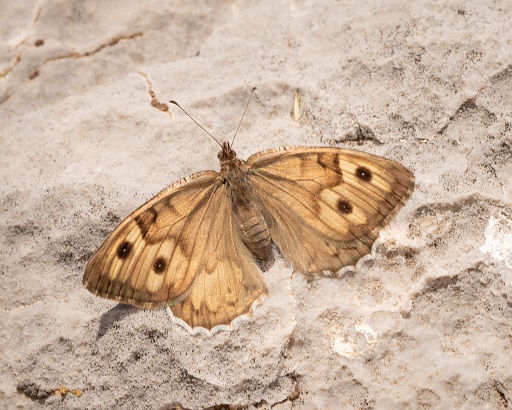
Fig. 5a. Pseudochazara geyeri ♀ ups, Mali i Thatë, east of Bletas (Albania), 09.viii.2025 (Photo: Giuseppe Molinari)
Fig. 5b. Pseudochazara geyeri ♂ uns, Mali i Thatë, east of Bletas (Albania), 09.viii.2025 (Photo: Giuseppe Molinari)
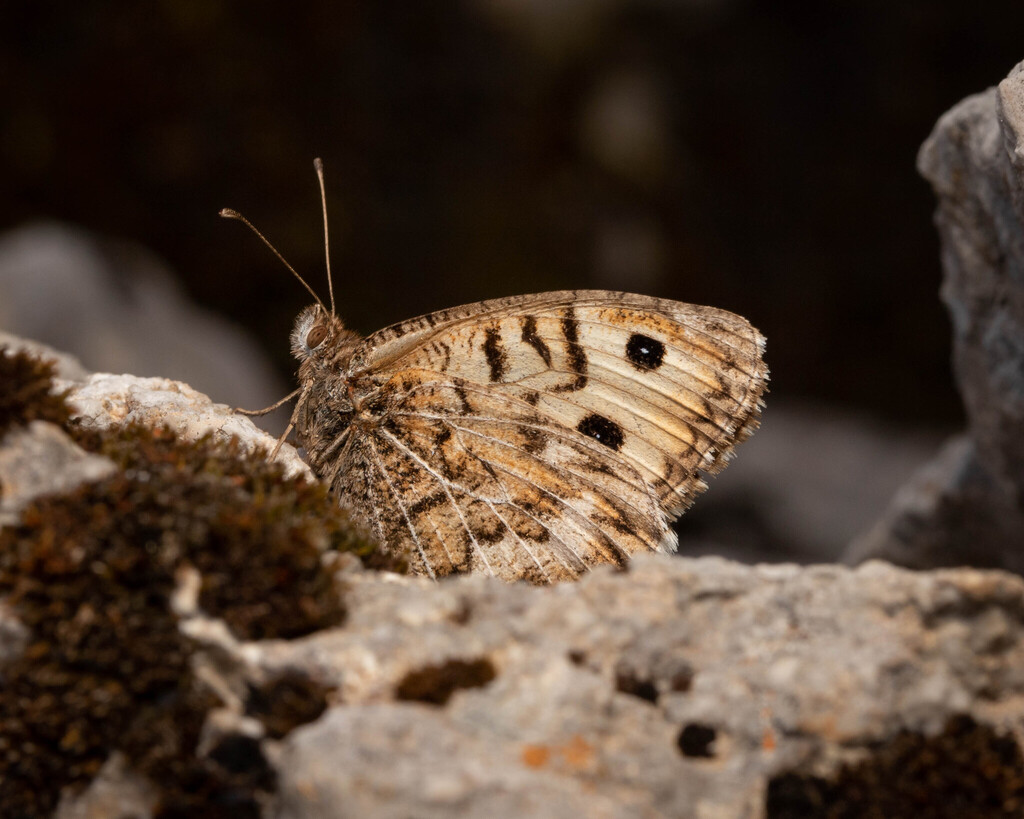

Fig. 5c. Pseudochazara geyeri ♂ uns, Mali i Thatë, east of Bletas (Albania), 09.viii.2025 (Photo: Giuseppe Molinari)
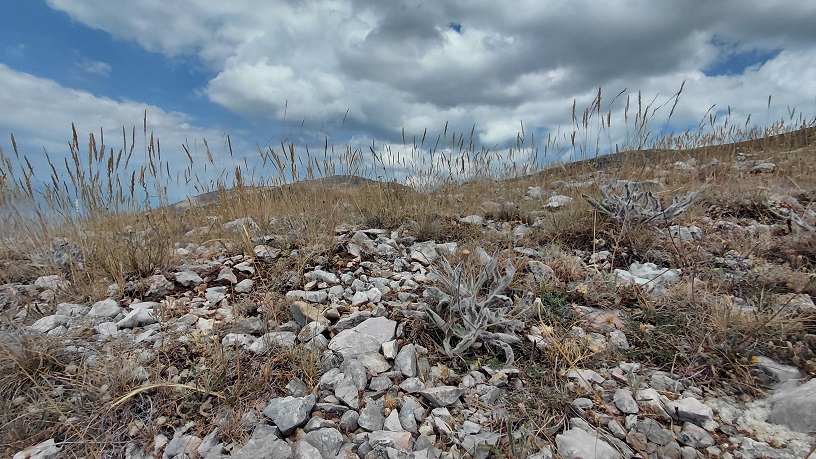
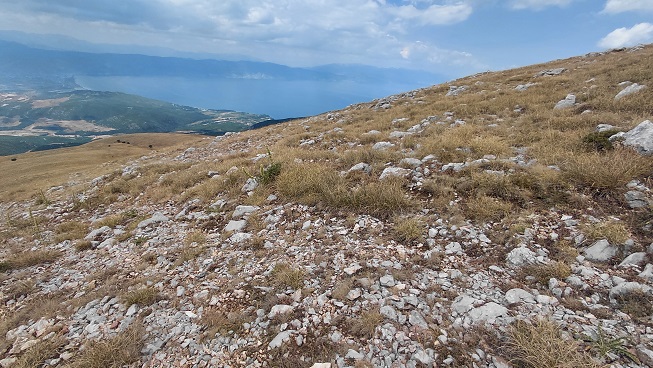
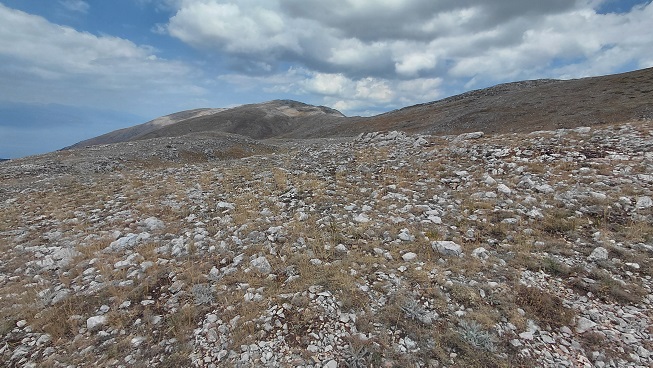
Fig. 5d. Micro habitat of Pseudochazara geyeri, Mali i Thatë, east of Alarup (Albania), 2060 m asl, 02.viii.2025 (Photo: Sylvain Cuvelier)
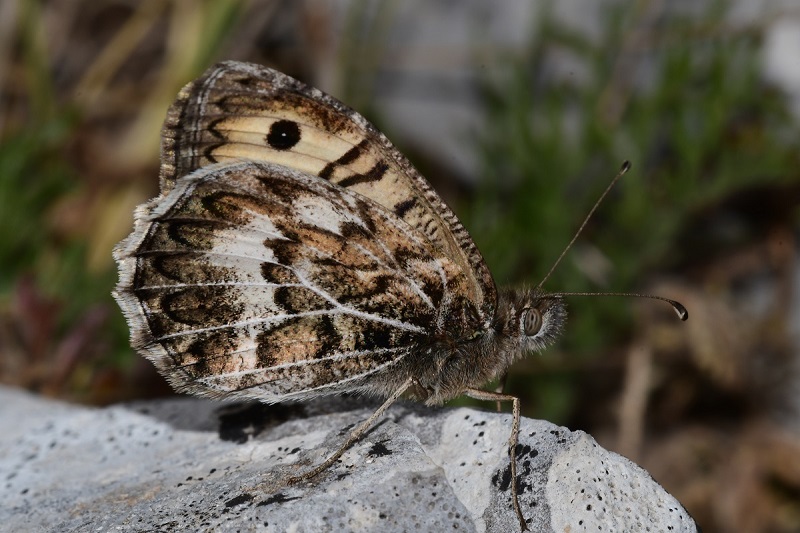

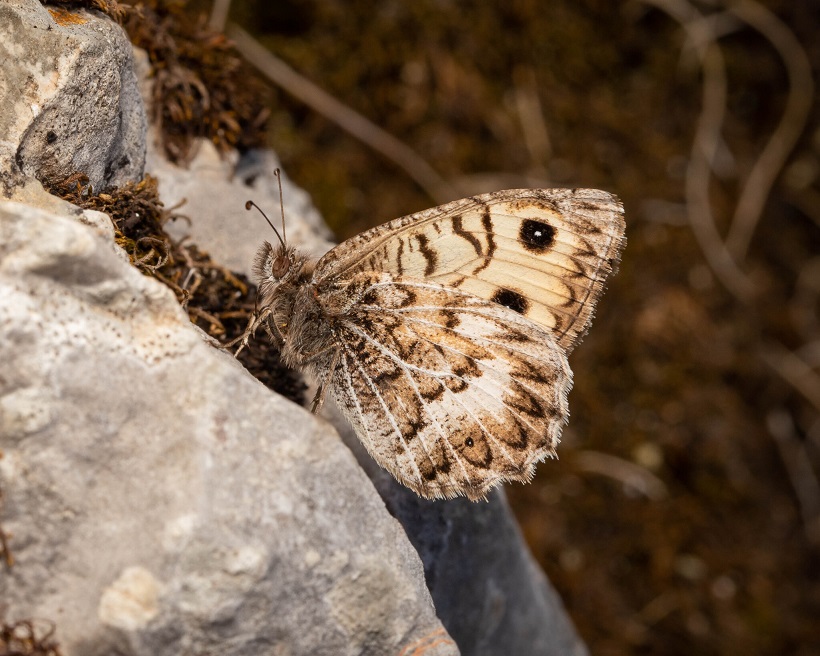
Fig. 5e. Pseudochazara geyeri ♂ uns, Mali i Thatë, east of Alarup (Albania), 2060 m asl, 02.viii.2025 (Photo: Sylvain Cuvelier)
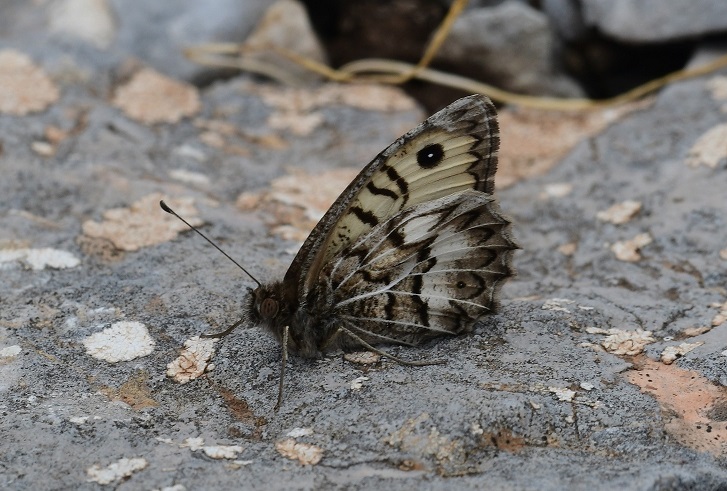
Fig. 5f. Pseudochazara geyeri ♂ uns, Mali i Thatë, east of Alarup (Albania), 1930 m asl , 02.viii.2025 (Photo: Sylvain Cuvelier)
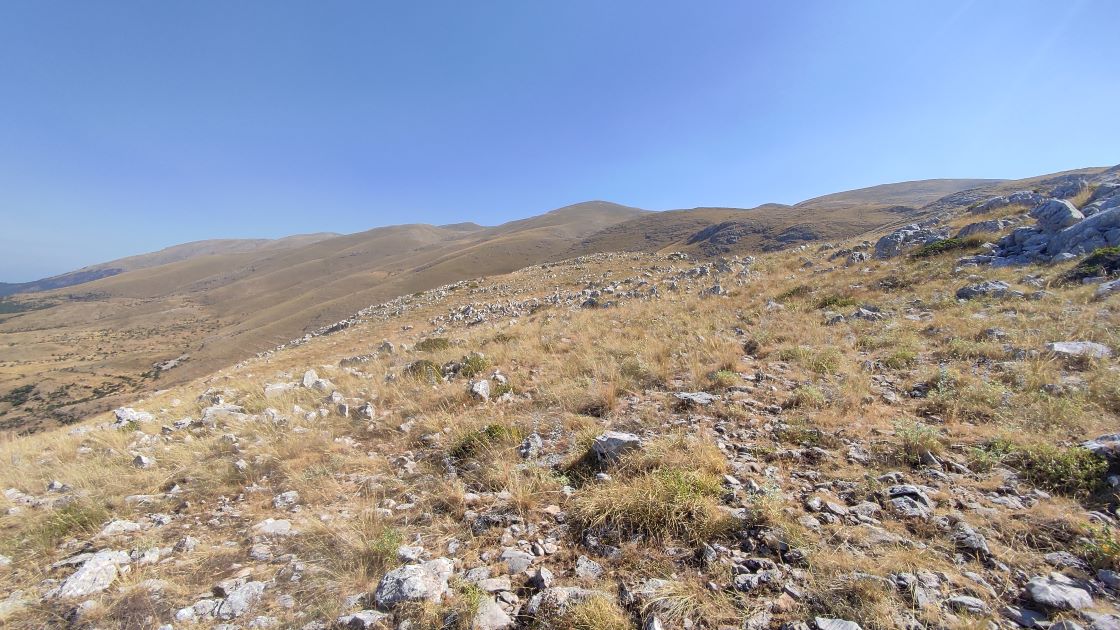

Fig. 5g. Habitat of Pseudochazara geyeri, Mali i Thatë, east of Bletas (Albania), 1650 m asl, 09.viii.2025 (Photo: Giuseppe Molinari)
Fig. 5h. Habitat of Pseudochazara geyeri, Mali i Thatë, east of Alarup (Albania), 2050 m asl, 09.viii.2025 (Photo: Giuseppe Molinari)


Fig. 5i. Habitat of Pseudochazara geyeri, Mali i Thatë, east of Alarup (Albania), 1930 m asl, 02.viii.2025 (Photo: Sylvain Cuvelier)
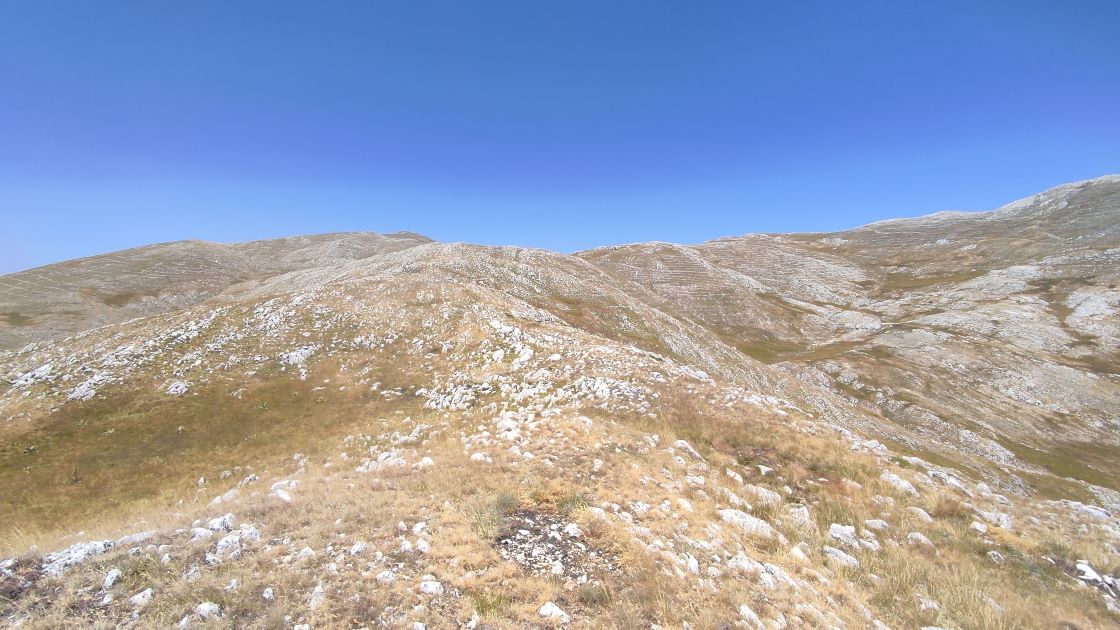
Fig. 5j. Habitat of Pseudochazara geyeri, Mali i Thatë, east of Alarup (Albania), 2064 m asl, 02.viii.2025 (Photo: Sylvain Cuvelier)

Results and discussion
The tltle "Die Lepidopterenfauna Albaniens" (Rebel & Zerny 1931) likely contributed to the idea that Pseudochazara geyeri (Herrich-Schäffer, [1846]) occured in Albania, while the shifting historical borders may have been overlooked by subsequent authors.
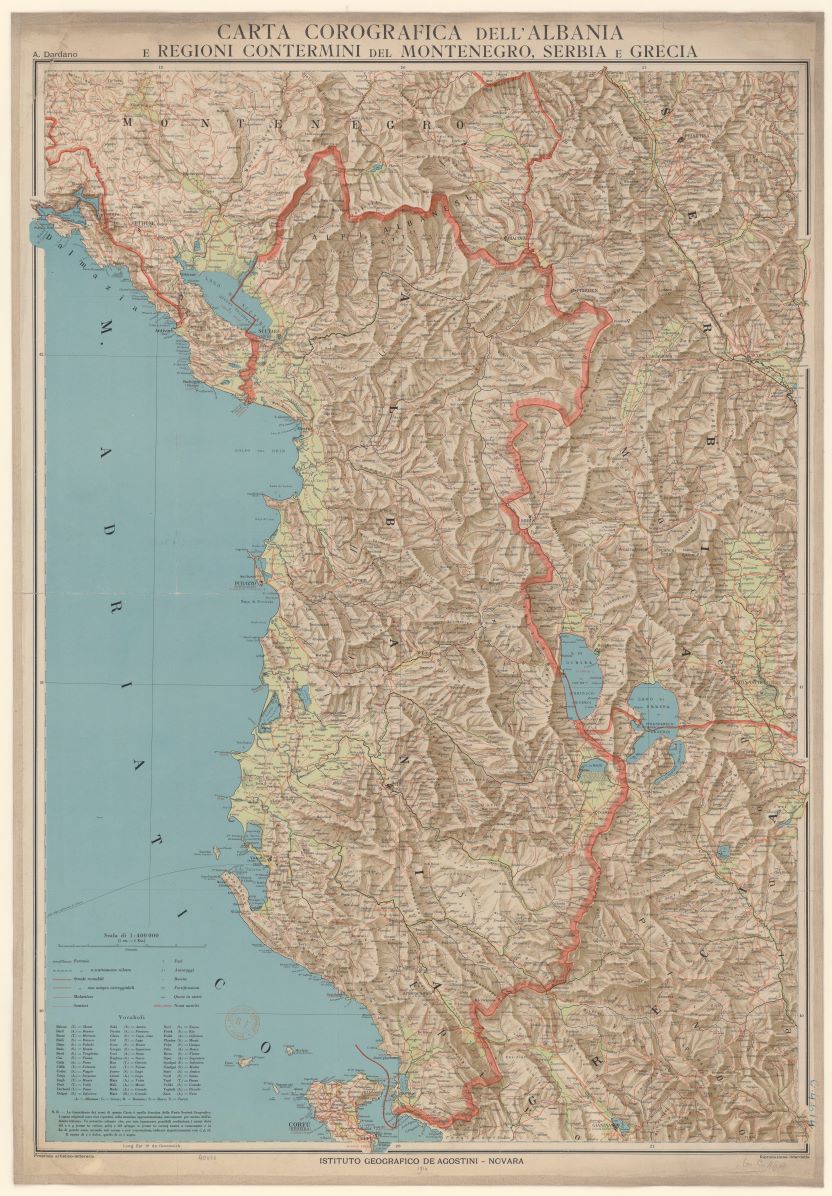
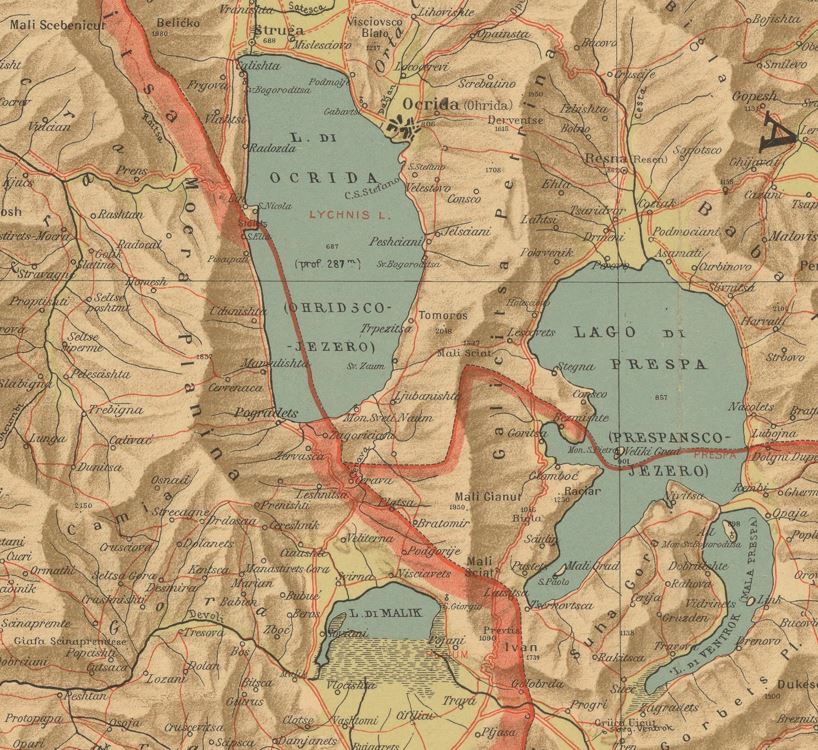
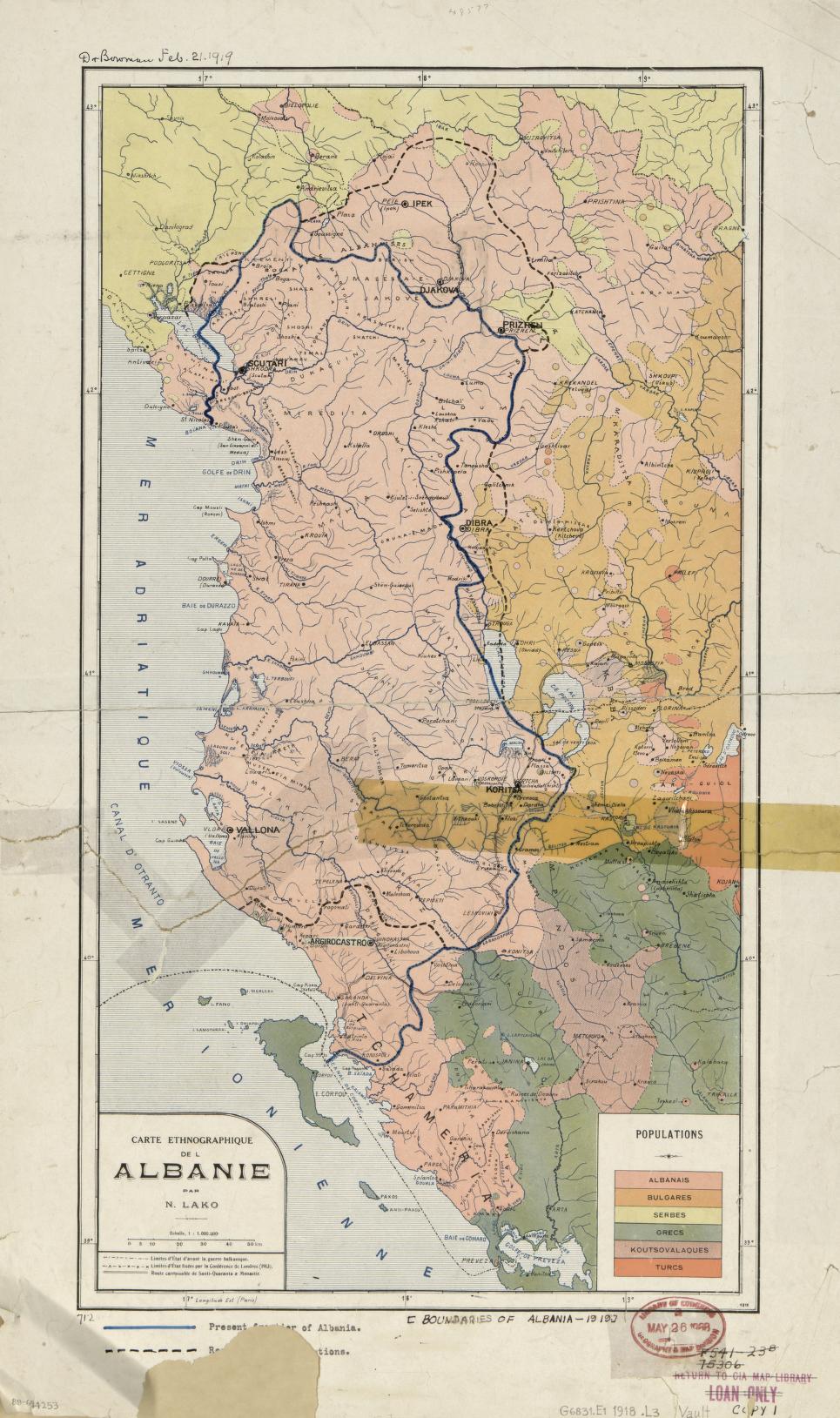
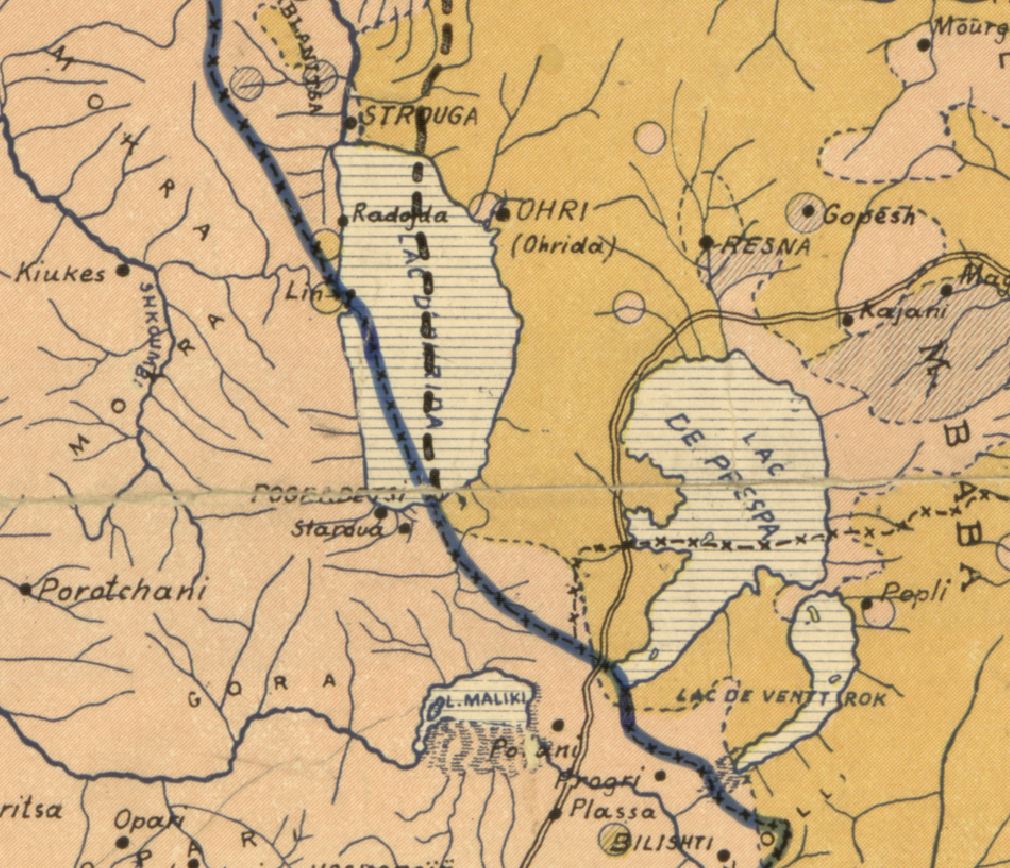
The frontiers have changed several times since the discovery of P. geyeri, and the localities cited in Drenowsky (1921, 1930) and Rebel & Zerny (1931) are today outside Albania, and were not within its historical borders either (see maps). Two maps (Fig. 7–8) from the period of Drenowsky's records (1917–1918) show that Mali i Thatë was at best only marginally within Albanian territory.
The comment in Slivov & Abadjiev (1999), "The reported occurence of the species in Albania (Tolman & Lewington 1997: 201) is very possible but still not confirmed." was the first indication that P. geyeri had no verified records in Albania at the time.
The first record with a clearly defined locality in Albania (Fig. 3a), on Mali i Thatë, was later published by Misja (2005) based on personal observations (Fig. 3b).


Fig. 6a. The Principality of Albania in 1916 with the national border. (url)
Fig. 6b. Detail of Map 7a focusing on the transboundary region of Lake Ohrid and Lake Prespa.


Fig. 7a. Carte ethnographique de l'Albanie 1918. Blue line: frontier of Albania. (Lako & Bowman 1918)
Fig. 7b. Detail of Map 8a focusing on the transboundary region of Lake Ohrid and Lake Prespa.

The presence of P. geyeri has now been reconfirmed for Albania, with the species recorded on Mali i Thatë between 1565 and 2088 m. This represents the first verified record since Misja (2005) and shows the species occurring at considerably higher elevations than reported by Popović et al. (2021) on Mt. Galičica, where the highest altitudinal range was 1616–1770 m.
On the basis of the observations by both authors, the species is likely to have a broader distribution on the western slopes of Mali i Thatë.
While compiling locality data from several sources (GBIF, iNaturalist, and Observation International) we discovered two observations (url1; url2) that were unknown to us during our August 2025 survey. These records were not included in the latest update of the Fluturat e Shqipërisë Atlas 09.i.2025, and were also absent from a recent GBIF download (27.x.2025), indicating that they were only recently added to the Observation.org platform.
The nearest population in Greece, on the Triklarion Mountains, lies roughly 30 km away as the crow flies. A small part of this mountain extends into Albania, with its highest point, Maja Vejskovarit, at 1533 m, but it is uncertain whether the elevation there is sufficient for P. geyeri. Between these areas, the peak of Mali i Ivanit (1768 m) may reach a suitable altitude, although earlier surveys have not recorded the species there.
Pelister National Park presents an intriguing case regarding the presence of P. geyeri.
Drenowsky (1921) reported having surveyed multiple areas near Ohrid, including the Baba Mountains (Pelister range). However, in his 1930 publication, he recorded P. geyeri only from Mt. Galičica, with no observations from the Baba Mountains.
Map 164 in Schaider and Jakšić (1989) clearly marks two dots in the Pelister area and is the only source, known to us, to have ever provided direct information on P. geyeri in this region.
Predrag Jakšić (oral communication) reported that Schaider surveyed Pelister before him and was very familiar with the terrain, marking two locations (10 × 10 km squares) for P. geyeri in Schaider & Jakšić (1989). However, Jakšić himself has never observed the species in the field and Pelister Mt was one of his favorite places where he went many times. More than 35 years have passed since this monograph was published, and several subsequent sources (Tolman 1997, Tshikolovets 2011, Takáts & Mølgaard 2016) appear to have repeated the reported presence on Pelister based solely on Schaider & Jakšić (1989) although P. geyeri was absent from two studies (Micevski & Micevski 2002/2003; Micevski & Micevski 2004/2005) dedicated to Pelister National Park. Nikola and Branko Micevski, who have extensively surveyed the area, confirmed that they are not aware of any other publication providing evidence of P. geyeri in Pelister National Park.
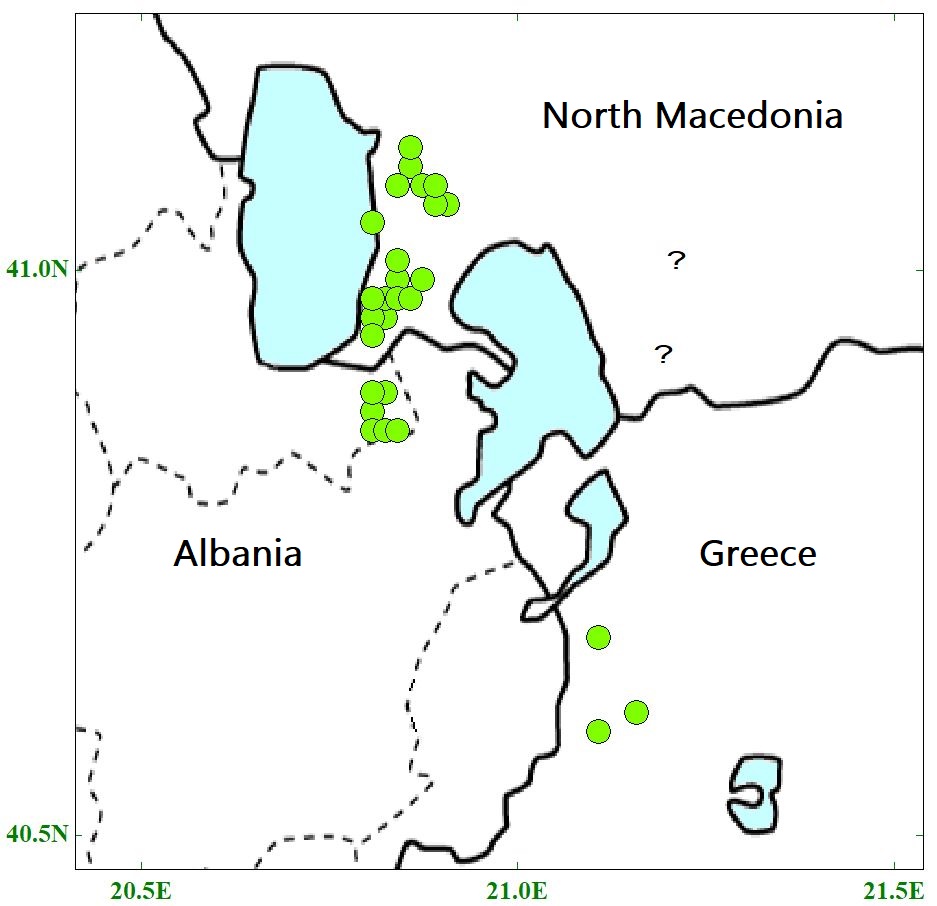
The geological framework of the three massifs, Mount Pelister (North Macedonia), Mount Galičica and Mali i Thatë (Albania), illustrates a clear distinction in substrate, relief and geomorphic processes. Mount Pelister is largely comprised of crystalline rocks, mainly granites and metamorphic schists, with only minor limestones, and its relief is dominated by glacial and periglacial landforms rather than classic karst terrain (Ribolini et al. 2018). In contrast, Mount Galičica is characterised by a thick carbonate, mainly limestone, cover facilitating substantial karst development (Gromig et al. 2018). Further south, Mali i Thatë is almost entirely composed of limestone formations, exhibits karstic phenomena and functions as an anticline bridging the Ohrid and Prespa basins (Eftimi et al. (2002). Together, these contrasting geologies underscore that the availability of limestone substrate and karstic features is minimal on Mount Pelister but very pronounced on the Galičica and Mali i Thatë massif. At the Locus Typicus, south of Mount Ararat, the substrate occupied by P. geyeri has not been documented in the literature, as far as is known to us. However, given the region’s predominantly volcanic geology, it is likely that at least some habitats of P. geyeri do not include limestone or classical karstic features. This suggests that the crystalline and granitic substrate of Mount Pelister alone cannot exclude its potential as P. geyeri habitat. Given the uncertainty of P. geyeri’s presence and the differing geology of Mount Pelister, we consider that it warrants renewed investigation. This uncertainty is indicated in Fig. 8 with two question marks, treating the species as data deficient for the park.
Data (GBIF, iNaturalist, Observation.org) with a positional accuracy of less than 5 km are included in the distribution map (Fig. 8) together with records from Holik (1949), Arnscheid & Arnsheid (1980), Schaider & Jakšić (1989), Krpač et al. (2011), Roger Vila's database and our personal observations from Albania and Greece.


Fig. 8. Distribution map of P. geyeri across the western Balkans, including historical and recent records.

The recent analysis by Paparisto & Cuvelier (2025) of Albania’s Red Lists, incorporating data from the most recent Fluturat e Shqipërisë Atlas 09.i.2025, provided a basis for reassessing the conservation status of P. geyeri in the country. Historically, the national Red List status of P. geyeri in Albania had changed from Vulnerable (VU – A1b) in 2006, to Vulnerable (VU) in 2013, and to Near Threatened (NT) in 2022. These changes were driven by the lack of new observations since the record by Misja (2005), coupled with increasing pressures on the species' habitat, including degradation and climate-change impacts on the dry, stony slopes at higher altitudes.
As shown in the comparative overview presented in the BCE website for P. geyeri (url), which contrasts the European Red List assessments of 2010 and 2025, the species had been assessed as Least Concern (LC) in 2010. The new European Red List of van Swaay et al. (2025), adopting the IUCN criteria, now classifies the species as Endangered (EN) under the criteria B1ab(iii,v)+B2ab(iii,v), reflecting its restricted range (both Extent of Occurrence [EOO] and Area of Occupancy [AOO]), its occurrence in few localities, and evidence of continuing declines in habitat quality and population size.
The findings presented here, raise questions about how the species’ status should be interpreted at both European and national level. Given the presence of a seemingly strong population on Mali i Thatë, combined with the possible absence of P. geyeri from Mt. Pelister, it is worth considering whether the European EN classification fully reflects the situation in this part of its range. Similarly, the recent observations prompt a review of the Near Threatened (NT) status in the Albanian Red List (2022), as the local abundance and extent on Mali i Thatë may indicate that the species is more secure nationally than previously assumed, while still warranting careful monitoring to ensure population stability and assess potential threats.
The taxonomic status of all the described subspecies of P. geyeri remains complex and should be approached cautiously.
Morphological traits, including colouration and wingspan, are reported to be variable and appear to depend on local environmental conditions. Hesselbarth et al. (1995a-b) synonymised the described subspecies, emphasising the difficulty of defining stable taxonomic units within the species.
Only mitochondrial data (COI gene) are currently available for this group, which provides limited resolution for distinguishing closely related populations.
The BOLD sequence cluster BIN:AAD3197, representing P. geyeri, currently includes records identified as multiple other Pseudochazara taxa: Pseudochazara graeca (Staudinger, 1870), Pseudochazara mamurra (Herrich-Schäffer, [1846]), Pseudochazara beroe (Freyer, [1844]), Pseudochazara amymone Brown, 1976, Pseudochazara schahkuhensis (Staudinger, 1881), Pseudochazara sintenisi (Staudinger, 1895), Pseudochazara daghestana (Holik, 1955), Pseudochazara kermana Eckweiler, 2004, Pseudochazara alpina (Staudinger, 1878) and Pseudochazara lydia (Staudinger, 1878). This suggests that the BIN contains specimens from several species, indicating either incomplete lineage sorting, misidentifications, or the limited discriminatory power of COI barcoding within this complex.
Taken together, both morphological variability and the limited molecular evidence, it is most appropriate to treat the Balkan population as a geographical race, P. geyeri occidentalis, reflecting the clearly disjunct nature of the Balkan population relative to the species’ main distribution in Asia.

Conclusions
This study confirms the single previously reported record of Pseudochazara geyeri (Herrich-Schäffer, [1846]) in Albania by Misja (2005), documenting a clearly defined population on the west-facing slopes of Mali i Thatë between 1565 and 2088 m. The species appears locally well established and may occupy a broader area of suitable high‑altitude habitat than previously recognised.
The presence of the species on Mt. Pelister in North Macedonia needs verification.
While P. geyeri is listed as Endangered (EN) on the European Red List 2025 and Near Threatened (NT) on the Albanian Red List 2022, these observations suggest that the Albanian population may be more secure than assumed, although it remains vulnerable.
The Balkan population is tentatively regarded as a geographical race (P. geyeri occidentalis), pending further morphological and genome-wide genomic research, given its disjunct distribution and the limited resolution of mitochondrial COI data.
Conservation efforts should focus on maintaining habitat integrity on Mali i Thatë and exploring adjacent massif zones to clarify the species’ regional distribution.

Author contribution
Sylvain Cuvelier: conceptualization, field work, analysis, visualisation, writing - original draft, writing – review and editing.
Giuseppe Molinari: conceptualization, field work, analysis, writing - original draft, writing – review and editing.

Acknowledgements
We are sincerely grateful to Morten S. Mølgaard for reviewing the final draft, the attention to detail and thoughtful feedback have been invaluable in refining and strengthening this work.
We thank Predrag Jakšić for his insights regarding the occurrence of P. geyeri on Mount Pelister, for providing photographs of specimens from his collection, and for granting access to relevant publications. We also thank Nikola and Branko Micevski for their information on P. geyeri in Pelister National Park.
Our thanks also go to Stoyan Beshkov for supplying publications, to Lazaros Pamperis for providing information on the current status of P. geyeri in Greece and to Anila Paparisto to check data in Misja (2005).
We are grateful to Roger Vila for access to genetic data of P. geyeri from his database and to Michel Taymans for his taxonomic analysis of the species. Finally, we acknowledge with appreciation the data providers and citizen scientists who contributed biodiversity records to the Global Biodiversity Information Facility (GBIF), iNaturalist, and Observation International.

References

Aistleitner E. & Gros P. 2020. Zur Chorologie und Phaenologie der Dickkopf-Falter Europas, mit Schwerpunkten in den Ost- und Südalpen, in Italien sowie auf der Iberischen Halbinsel (Lepidoptera, Hesperiidae). —  Linzer biologische Beiträge 52(1): 5-29. (url)

Arnscheid W. & Arnscheid W. 1980. Reiseeindrucke aus jugoslawisch Mazedonien. – Mitteilungen der Westfalischen Entomologen, Bochum 4(4): 39–52.

Butterfly Conservation Europe. 2025. Grey Asian Grayling (Pseudochazara geyeri). (url) (Accessed 2.xi.2025).

Cuvelier S. & Paparisto A. 2025. Fluturat e Shqipërisë Atlas 09.i.2025. — Chronicles Fluturat e Shqipërisë 2025(1): 1-18. https://doi.org/10.5281/zenodo.14947890

Dapporto L., Menchetti M., Vodă R., Corbella C., Cuvelier S., Djemadi I., Gascoigne-Pees M., Hinojosa J., Lam N., Serracanta M., Talavera G., Dincă V. & Vila. R. 2022a. The Atlas of mitochondrial diversity of Western Palearctic butterflies. — Global Ecology and Biogeography. 00, 1–7. (url)

Dapporto L., Menchetti M., Vodă R., Corbella C., Cuvelier S., Djemadi I., Gascoigne-Pees M., Hinojosa J., Lam N., Serracanta M., Talavera G., Dincă V. & Vila. R. 2022b. The Atlas of mitochondrial diversity of Western Palearctic butterflies. Appendix S1. — Global Ecology and Biogeography. 00, 1–7. (url)

Drenowsky A. 1921. Zur Lepidopterenfauna Makedoniens. — Zeitschrift für wissenschaftliche Insektenbiologie 16: 164-166. (url)

Drenowsky A. 1930. Beitrag zur Lepidopterenfauna S.W. Macedoniens. — Zeitschrift Bulg. Akad. Wissensch. 42: 120-177.

Eftimi R., Skende P. & Zoto J. 2002. Isotope study of the connection of Ohrid and Prespa lakes. — Geologica Balcanica 32(1): 43-49. (url)

Fruhstorfer H. 1911. Satyrus geyeri aristochinus. — In: Seitz, A. (ed.), Die Gross‑Schmetterlinge der Erde, Band 9. Stuttgart. 1197 p. (url)

Gromig R., Mechernich S., Ribolini A., Wagner B., Zanchetta G., Isola I., Bini M. & Dunai T. 2018. Evidence for a Younger Dryas deglaciation in the Galicica Mountains (FYROM) from cosmogenic 36Cl. — Quaternary international 464: 352–363. http://dx.doi.org/10.1016/j.quaint.2017.07.013

Gross F. 1978. Beitrag zur Systematik von Pseudochazara Arten (Lep. Satyridae). — Atalanta 9: 41–103. (url)

Herrich-Schäffer G. A. W. [1846]. Systematische Bearbeitung der Schmetterlinge von Europa, zugleich als Text, Revision und Supplement zu Jakob Hubner's Sammlung europäischer Schmetterlinge. Erster Band. Die Tagfalter: 1-164, pl. 1-134 (Papilionides), pl. 1-7 (Hesperides).  — Regensburg: G. J. Manz (Ed.). 163, pl. 62, fig. 301-302

Herrich-Schäffer, [1851]. Systematische Bearbeitung der Schmetterlinge von Europa, zugleich als Text, Revision und Supplement zu Jakob Hubner's Sammlung europäischer Schmetterlinge. Sechster und letzter Band. Nachtrag zum ersten Bande: 1-31. (13)

Hesselbarth G., van Oorschot H. & Wagener S. 1995a, Die Tagfalter der Türkei unter Berücksichtigung der angrenzenden Länder. Volume 1-2. — Selbstverlag Sigbert Wagener, Bocholt. 1354 p.

Hesselbarth G., van Oorschot H. & Wagener S. 1995b, Die Tagfalter der Türkei unter Berücksichtigung der angrenzenden Länder. Volume 3. — Selbstverlag Sigbert Wagener, Bocholt. 847 p.

Higgins L. 1975. The Classification of European Butterflies. — William Collins Sons & Co. Ltd., Glasgow. 320 p.

Higgins L. & Riley N. 1970. A field Guide to the Butterflies of Britain and Europe. — London: Collins (Ed.). 380 p.

Holik O. 1949. Ueber die Gattung Satyrus L. (Lepidoptera, Satyridae) — Zeitschrift der Wiener Entomologischen Gesellschaft 34 : 98-105. (url)

Hristova H. & Beshkov S. 2017. Checklist of the Superfamilies Hesperioidea and Papilionoidea (Insecta: Lepidoptera) of Bulgaria, with Application of the IUCN Red List Criteria at National Level. — Acta zoologica bulgarica 69 (1): 105-114. (url)

Kolev Z. 2002. Critical notes on some recent butterfly records (Lepidoptera: Papilionoidea & Hesperioidea) from Bulgaria and their source collection. — Phegea, 30 (3): 95-101. (url)

Koutroubas A. 1993. Pseudochazara geyeri occidentalis (Rebel & Zerny, 1931) espèce nouvelle pour la Grèce (Lepidoptera: Nymphalidae: Satyrinae). — Phegea 21(2): 45-46. (url)

Krpač V., Darcemont C., Krpač M. & Lemonnier-Darcemont M. 2011. Fauna of butterflies (Papilionoidea) in the National Park Galičica, Republic of Macedonia. — Nota lepidopterologica 34(1): 49–78. (url)

Krpač V. & Darcemont C. 2012. Red list of butterflies (Lepidoptera: Hesperioidea & Papilionoidea) for Republic of Macedonia. — Revue Ecologie (Terre Vie) 67: 117–122. (url)

Kudrna 2019. Distribution of Butterflies and Skippers in Europe (Lepidoptera: Rhopalocera, Grypocera). 24 Years Mapping European Butterflies (1995-2019) Final report. — Prachatice: Společnost pro Ochranu Motýlů (SOM). 364 p.

Lako N. & Bowman I. 1918. Carte ethnographique de l’Albanie [Map]. — [Paris?: s.n] [Map] Retrieved from the Library of Congress. (url) (Accessed 27.x.2025).

Micevski N. & Micevski B. (2002/2003). Butterfly fauna (Lepidoptera: Papilionoidea & Hesperioidea) in the National Park Pelister. — Annual. Biol. Skopje. 55–56: 75–98. (url)

Micevski B. & Micevski N. (2004/2005). A biogeographical and ecological analysis of the butterfly fauna of Pelister National Park. — Biologia Macedonica 57/58: 89–98. (url)

Misja K. 2005. Fluturat e Shqipërisë. Macrolepidoptera (Rhopalocera, Bombyces & Sphinges, Noctuidae, Geometridae). — Akademia e Shkencave e Shqipërisë, Instituti i Kërkimeve Biologjike,Tiranë, 247 p. [in Albanian]. (url)

Pamperis L. 2025. The Butterflies of Greece — New maps distribution of species 3.3’’ and new chart 4.5’’. (url)

Paparisto A. & Cuvelier S. 2025. Unlocking the secrets of Albania's endangered butterfly populations: a comprehensive review of Red Lists and strategic approaches for enhancing conservation efforts to better target species and priority areas. — Chronicles Fluturat e Shqipërisë 2025(1): 20-24. doi.org.10.5281/zenodo.14885213

Popović M., Micevski B. & Verovnik R. 2021. Effects of elevation gradient and aspect on butterfly diversity on Galičica Mountain in the Republic of Macedonia (south–eastern Europe). — Animal Biodiversity and Conservation 44.1: 67-79. (url)

Rebel H. & Zerny H. 1931. Die Lepidopterenfauna Albaniens. — Denkschriften der Akademie der Wissenschaften Wien, mathematischnaturwissenschaftliche Klasse 103: 37–161. (url)

Ribolini A., Bini M., Isola I., Spagnolo M., Zanchetta G., Pellitero-Ondicol R., Mechernich S., Gromig R., Dunai T., Wagner B. & Milevski I. 2018. An Oldest Dryas glacier expansion on Mount Pelister (Former Yugoslavian Republic of Macedonia) according to 10Be cosmogenic dating. — Journal of the Geological Society 175(1): 100-110. https://doi.org/10.1144/jgs2017-038

Schaider P. & Jakšić P. 1989. Die Tagfalter von Jugoslawisch Mazedonien Diurna (Rhopalocera und Hesperiidae) — Selbstverlag Paul Scheider, München, 199 p.

Slivov A. & Abadjiev S. 1999. Two Pseudochazara species, new for Bulgaria (Lepidoptera: Nymphalidae: Satyrinae). — Phegea 27(4): 145-146. (url)

Takáts K. & Mølgaard M. 2016. Partial mtCOI-sequences of Balkanic species of Pseudochazara (Lepidoptera: Nymphalidae, Satyrinae) reveal three well-differentiated lineages. — Entomologica romanica 19: 21–40. (url)

Taymans M. & Cuvelier S. 2025. A dynamic checklist of the Western Palearctic butterflies hyperlinked to the original descriptions at species, genus and family level (Lepidoptera, Papilionoidea). — Archives of Western Palearctic Lepidoptera 2025(1): 1-70. doi.org/10.5281/zenodo.14733224

Tolman T. & Lewington R. 1997. Field Guide of the Butterflies of Britain and Europe. — Harper Collins Publishers, London, 320 p.

Tshikolovets V. 2011. Butterflies of Europe & the Mediterranean area. — Pardubice: Tshikolovets (Ed.). 544 p.

Tshikolovets V. & Nekrutenko (†) Y. 2012. The Butterflies of Caucasus and Transcaucasia (Armenia, Azerbaijan, Georgia and Russian Federation). — Kyiv / Pardubice: Tshikolovets Publications, 423 p.

Van Swaay C., Warren M., Ellis S., Clay J., Bellotto V., Allen D. & Trottet A. 2025. Measuring the pulse of European biodiversity. European Red List of Butterflies. — Brussels, Belgium: European Commission. https://doi.org/10.2779/935927

Verovnik R. & Wiemers M. 2016. Species delimitation in the Grayling genus Pseudochazara (Lepidoptera, Nymphalidae, Satyrinae) supported by DNA barcodes. — Zookeys 600: 131–154. (url)

Wikipedia contributors, Principality of Albania, Wikipedia, The Free Encyclopedia. (url) (accessed 27.x.2025).


Archives of Western Palearctic Lepidoptera 2025
Editors-in-Chief: Michel Taymans & Sylvain Cuvelier
This work is licensed under a Creative Commons Attribution 4.0 International License (CC BY 4.0)
ISSN 3041-6531